


Are Green Hydrogen and Battery Energy Storage Systems the Next Big Opportunity in the Energy Market?
Key Takeaways:
|
The global energy transition is opening up opportunities that extend well beyond conventional solar and wind generation. Businesses are increasingly exploring technologies that can support decarbonization while addressing reliability, flexibility, and long-term energy security. Green hydrogen and Battery Energy Storage Systems, or BESS, have emerged as two important areas within this shift. But their commercial potential can vary significantly across industries, markets, applications, and regulatory environments. For companies considering investment, expansion, partnerships, or technology development, understanding the market realities is critical. This article explores how green hydrogen and BESS work, where the business opportunities lie, the risks companies need to consider, and how energy market research can support business decisions.
What is Green Hydrogen and Where Does It Fit Into the Energy Transition?
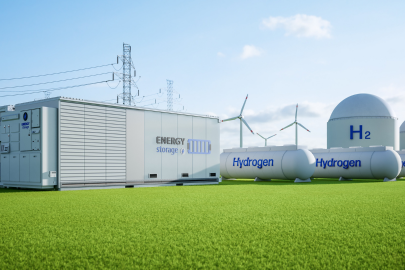
Green hydrogen is hydrogen produced using electricity generated from renewable energy sources such as wind or solar. Through electrolysis, electricity splits water into hydrogen and oxygen without relying on fossil fuels during the production process.
Its potential lies largely in sectors where direct electrification can be difficult. Heavy industries such as steel, fertilizers, chemicals, and refining may use green hydrogen as a feedstock or energy source as they work toward lower-carbon operations.
Other potential applications include heavy transportation, shipping, energy storage, and selected industrial processes. Green hydrogen may also allow renewable electricity generated in one location or period to be converted into a form that can be stored, transported, or used later.
However, its commercial feasibility depends on several factors, including renewable electricity costs, electrolyzer efficiency, infrastructure availability, demand, regulation, and access to financing.
Read Also: The Protein Boom in Food and Beverages: How Market Research Can Guide Business Strategy
What are Battery Energy Storage Systems and Why Are They Gaining Attention?
Another technology becoming increasingly important to the energy transition is the Battery Energy Storage System (BESS). While green hydrogen can support decarbonization across hard-to-electrify sectors, BESS addresses a different challenge: storing electricity and making renewable power more flexible and reliable.
Battery Energy Storage Systems store electricity so that it can be used when required rather than immediately after generation. This becomes particularly important as electricity systems integrate greater amounts of variable renewable energy. Solar power generation, for example, peaks during daylight hours, while electricity demand may remain high after sunset. BESS can store excess electricity and discharge it later.
Applications can include:
- Grid balancing and frequency management
- Renewable energy integration
- Peak-demand management
- Backup electricity for businesses and facilities
- Commercial and industrial energy optimization
- Microgrids and distributed energy systems
- Support for electric vehicle charging infrastructure
For utilities, businesses, renewable developers, and infrastructure companies, storage can therefore become an important part of how electricity is generated, managed, and consumed.
Why Green Hydrogen and BESS Are Emerging as Energy Market Opportunities
Several broader changes are increasing commercial interest in both technologies.
- Renewable energy deployment is expanding the need for technologies that can manage intermittent generation.
- Companies are also setting decarbonization targets that may require solutions beyond purchasing renewable electricity.
- Energy security has become another consideration. Businesses and governments are assessing how domestic renewable resources, storage technologies, and alternative fuels can reduce dependence on volatile or concentrated energy supplies.
- At the same time, policy incentives, technology development, industrial electrification, and investment in low-carbon infrastructure are encouraging companies to evaluate new energy models.
Read Also: Mobility-as-a-Service: What's Driving the Shift from Ownership to Access?
These trends do not mean that every green hydrogen or BESS opportunity will be commercially viable. Rather, they are creating multiple potential markets that businesses need to evaluate individually through detailed renewable energy market research.
Where Do Business Opportunities Lie Across the Energy Value Chain?
The opportunity is not limited to hydrogen producers or battery manufacturers. Multiple stakeholders can participate across the wider ecosystem.
1. Renewable Energy Developers
Renewable developers can integrate storage into solar and wind projects, develop hybrid renewable-plus-storage facilities, or supply renewable electricity to green hydrogen projects.
BESS may also allow developers to manage the timing of electricity supply more effectively, while hydrogen production can potentially create another source of demand for renewable generation.
2. Utilities and Grid Operators
Utilities can use storage for peak management, grid stabilization, renewable integration, and reliability.
As electricity systems become more distributed and digitally managed, utilities may also require new forecasting, monitoring, control, and energy management technologies.
3. Industrial and Manufacturing Companies
Manufacturers can evaluate BESS for energy management, backup requirements, demand management, and greater use of onsite renewable electricity.
Industries such as steel, refining, fertilizers, and chemicals may also evaluate green hydrogen where it can replace conventional hydrogen or fossil-fuel-intensive industrial inputs.
4. Technology and Equipment Providers
A growing ecosystem can create demand for electrolyzers, battery systems, power electronics, storage containers, control technologies, hydrogen equipment, safety systems, and energy management software.
Technology providers may also find opportunities in component manufacturing, system integration, maintenance, and performance optimization.
5. Engineering, Infrastructure, and EPC Companies
Both green hydrogen and battery storage projects require extensive physical infrastructure.
Engineering and EPC businesses may participate in renewable generation facilities, battery installations, electrolyzer plants, transmission connections, hydrogen storage, transport infrastructure, and supporting utility systems.
Read Also: How Global Conflicts are Reshaping Energy Markets and Investment Strategies
6. Investors and Financial Institutions
Energy transition infrastructure can create opportunities for banks, private equity firms, infrastructure funds, strategic investors, and project financiers.
However, investors need to understand technology risk, future demand, regulation, revenue models, project economics, and competitive positioning before allocating capital.
7. Mobility and Transportation Companies
Green hydrogen may have potential applications in selected heavy-duty transportation and shipping segments, while BESS supports the wider electrification ecosystem.
Fleet operators, charging infrastructure businesses, logistics companies, and mobility technology providers may therefore find opportunities at different points in the market.
8. Digital and Software Providers
Modern energy infrastructure increasingly depends on software.
Potential opportunities include energy optimization platforms, predictive maintenance, asset monitoring, energy trading systems, grid management software, cybersecurity solutions, and analytics platforms.
What Risks are Making Businesses Cautious?
Despite their potential, green hydrogen and BESS are still evolving in terms of commercial maturity, infrastructure, cost competitiveness, and large-scale adoption. Their viability can also vary significantly by market, application, and regulatory environment. As a result, businesses need to assess several uncertainties before making major investment or market-entry decisions.
- Demand uncertainty: Adoption can depend on energy prices, industry economics, customer commitments, and the availability of competing technologies.
- Policy and regulatory risk: Incentives, subsidies, market rules, permitting requirements, and energy policies may change or be implemented at different speeds across markets.
- Infrastructure constraints: Hydrogen projects may require storage, transportation, renewable power, and distribution infrastructure. BESS projects can face grid connection and transmission limitations.
- Technology and performance risks: Battery degradation, efficiency losses, technology evolution, hydrogen storage challenges, and system performance can affect project economics.
- Supply chain risk: Critical minerals, batteries, electrolyzers, semiconductors, and specialized components may be sourced from geographically concentrated supply chains.
- Financial risk: High upfront costs, uncertain revenue models, financing costs, and long project development cycles can make investment decisions more complex.
- Cybersecurity risk: As battery systems and energy infrastructure become more connected, companies also need to consider digital security and operational resilience.
Read Also: Celebrity-Backed Beverage Brands: Trend, Fad, or Long-Term Opportunity?
What Should Businesses Evaluate Before Entering the Green Hydrogen or BESS Market?
Businesses should avoid evaluating an emerging energy market based only on overall growth expectations.
Before committing capital, companies should assess:
- Current and expected demand
- Priority customer segments
- Most attractive applications
- Geographic market potential
- Regulatory and policy conditions
- Competitor positioning
- Technology maturity and performance
- Pricing and customer willingness to pay
- Infrastructure readiness
- Potential suppliers, partners, and customers
The answers can vary significantly between countries and even between customer groups within the same market.
For example, an industrial company evaluating BESS may prioritize reliability and peak-demand savings, while a utility may focus more heavily on grid stability and renewable integration. Similarly, green hydrogen demand may depend on industry-specific economics and the availability of long-term buyers.
How Can Energy Market Research Reports Support Better Market Understanding?
Energy market research can help businesses gather reliable information on customers, competitors, suppliers, technologies, and other market participants.
Market sizing research can support estimates of current and future demand, while segmentation studies can help businesses examine different applications, customer groups, and geographies.
Competitor research can support the collection of data on established suppliers, emerging businesses, technology positioning, partnerships, and pricing approaches.
Primary research with customers, distributors, regulators, industry experts, suppliers, and other stakeholders can provide first-hand information that may not be available through secondary sources alone.
An experienced energy market research company can also support:
- Customer and stakeholder studies
- Go-to-Market research
- Competitor intelligence
- Pricing research
- Supplier and value-chain mapping
- Investment opportunity identification
- Policy and regulatory analysis
- Partner identification
- Technology perception studies
Customized renewable energy market research can support businesses that need primary data from emerging markets where existing secondary information may be limited, fragmented, or changing quickly.
Read Also: How the Selection of Quantitative Research Method Shapes the Quality of Your Data Collection
Turn Energy Opportunities Into Evidence-Based Decisions With Unimrkt Research
Green hydrogen and BESS can create meaningful opportunities, but the strongest prospects will depend on technology, application, geography, policy, infrastructure, and customer demand. Research can provide businesses with market data that supports their assessment of commercial opportunities before major strategic commitments.
Founded in 2009, Unimrkt Research has conducted multi-industry research across 90 countries spanning the Americas, Europe, Asia-Pacific, and Africa. Our capabilities cover more than 22 foreign languages, supporting both regional and multinational research programs. We provide primary research, qualitative and quantitative research, business research, and research support services across industries. Unimrkt Research follows ESOMAR norms and our ISO 20252 and ISO 27001 certifications reflect established standards for research processes and information security. Businesses exploring energy opportunities can work with our research teams for customized market research support.
To discuss your research requirements, contact us at +91-124-424-5210 or email sales@unimrkt.com. Alternatively, you can fill out our contact form, and our team will reach out to you shortly.
Frequently Asked Questions
Q1. How can companies estimate the addressable market for a green hydrogen project?
Energy market research can support the collection of data on demand, customer segments, pricing, policy conditions, infrastructure, and stakeholder perspectives that businesses can use when estimating an addressable market.
Q2. Which countries should businesses prioritize for renewable energy market research?
The answer depends on the technology and business model. Companies should compare factors such as renewable capacity, policy support, energy demand, infrastructure, industrial activity, investment climate, and customer readiness.
Q3. How can businesses assess customer willingness to adopt Battery Energy Storage Systems?
Primary research in the energy market can provide data on purchase drivers, operational concerns, preferred system specifications, financing requirements, and barriers to adoption among different customer segments.
Q4. What primary research methods are useful for emerging energy markets?
Common approaches include in-depth interviews, expert interviews, telephone surveys, online surveys, stakeholder consultations, and qualitative discussions with customers, suppliers, policymakers, and industry specialists.
Q5. How can energy market research reports support market-entry decisions?
They can provide data on market size, competition, customer demand, regulatory conditions, pricing, distribution structures, entry barriers, and potential partners that businesses can use when developing an entry strategy.
Q6. What should businesses look for in an energy market research company?
When looking for an energy market research company, businesses should consider sector understanding, primary research capabilities, geographic reach, respondent recruitment expertise, data quality standards, methodological flexibility, and experience managing multi-market data collection.
Q7. Can Unimrkt Research support multi-country energy studies?
Yes. Unimrkt Research conducts research across multiple countries and languages and can support regional or global studies involving different energy-sector stakeholders.
Q8. How can renewable energy market research help identify potential partners?
Research can support the mapping of technology providers, suppliers, developers, distributors, investors, EPC companies, customers, and other participants in the value chain, giving businesses structured data on potential market participants.
Quick Enquiry
Customer Service, We Make it Better
Recent Posts
- How to Clarify and Align Your Research Goals for Maximum Impact
- Mining Valuable Data: The Driving Force for an Effective Growth Marketing Strategy
- Speaking the Customers Language: 7 Tips for Meaningful Qualitative Research
- Creating Value for Investors: The Benefits of Primary Market Research
- Utilizing Closed-Ended Questions For Quantitative Market Research
- Capturing the Changing Interests of Millennials Through Qualitative Research
- Refining Unit Economics with Robust Quantitative Market Research
- A Concise Guide to Quantitative Market Research
- 3 B2B Market Research Trends That Could Shape 2024
- Eyes on 2024: Changes That Might Disrupt the Healthcare Industry This Year
- Cracking the Language to Make Survey Questions Inclusive in 2024
- Attracting Investors: How Market Research Can Solidify Your Case
- Solid Foundations: Ways to Enhance Trustworthiness in Qualitative Research
- What Makes CATI Research So Effective?
- Moderator Qualities That Improve Qualitative Market Research
- 5 Consumer Market Trends That Will Define 2024
- What are the strengths of quantitative research?
- How to Make Your Partnership with Primary Market Research Firms Fruitful
- A Quick Guide to Harnessing the Strengths of Quantitative Research
- Advice from Your Research Partner: Don't Compromise Quality on Online Surveys