
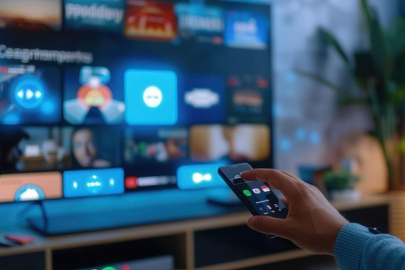


How Entertainment Market Research Can Support Hyper-Personalization Strategies
Personalization is no longer a novelty in media and entertainment. It is part of the expected experience. Whether audiences are choosing a show, discovering music, buying movie tickets, gaming, or engaging with live entertainment, they expect brands to recognize preferences and make discovery easier.
That expectation is rising as media habits fragment across television, streaming, theaters, social platforms, gaming, podcasts, and short-form video. A Deloitte study found that more than 92% of surveyed media and entertainment (M&E) companies planned to increase investment in personalization. It also found that 75% of surveyed M&E consumers said personalization frequently or very frequently increases brand satisfaction.
The challenge is that hyper-personalization cannot be built on algorithms alone. Businesses need reliable insight into what audiences do, why they do it, what they value, and when personalization becomes unhelpful. This is where primary market research for the entertainment industry can strengthen strategy.
Why Has Hyper-Personalization Become Fundamental to the Entertainment Industry?
Consumers today have more entertainment choices than ever. With content spread across streaming platforms, television, theaters, gaming, social media, and other channels, finding something relevant can itself become a challenge.
Hyper-personalization helps reduce that friction by making experiences more relevant to individual users. It can help entertainment businesses:
- Recommend content based on individual interests and behavior
- Make discovery faster and more intuitive
- Deliver more relevant offers and communications
- Adapt experiences across different devices and channels
- Reduce the amount of irrelevant content users have to navigate
Read Also: Subscription Fatigue and Ad-Supported Models: What's Next for Streaming Platforms?
Expectations have also been shaped by experiences outside entertainment. Personalized ecommerce recommendations, social media feeds, app experiences, and targeted offers have made consumers increasingly accustomed to brands recognizing their preferences.
Hyper-personalization is therefore moving well beyond simply suggesting “what to watch next.” It can now influence:
- Home-page layouts
- Trailers and promotional creative
- Email and push notifications
- Subscription bundles and offers
- Advertising
- Release campaigns
- Loyalty initiatives
- Theater and event recommendations
For entertainment businesses, the key question is where, when, and how personalization can genuinely improve the audience experience.
What Hyper-Personalization Strategies are Entertainment Businesses Implementing?
Entertainment businesses are using behavioral, contextual, and audience data to make experiences more relevant. Common approaches include:
- Behavioral personalization: Using viewing history, searches, completion rates, skips, saves, and genre preferences to refine recommendations.
- Context-based personalization: Adapting experiences based on factors such as device, location, time of day, viewing occasion, or household context.
- Personalized discovery: Customizing home pages, search rankings, curated collections, artwork, and trailers.
- Personalized marketing and offers: Tailoring email, push notifications, promotional messages, subscription offers, and re-engagement campaigns.
While these approaches can improve relevance, behavioral and platform data mainly show what audiences do. Entertainment industry research can add the context needed to understand why they behave that way, what they value, and which forms of personalization are most useful to them.
Read Also: Mobility-as-a-Service: What's Driving the Shift from Ownership to Access?
Where Does Entertainment Market Research Add Value?
As personalization becomes more important across the entertainment industry, market research can help businesses make better-informed decisions about audiences, experiences, and investments. Here are some of the areas where research can add value:
1. Build More Meaningful Audience Segments
Demographics alone rarely explain entertainment behavior. Two people of the same age and income can consume identical genres for different reasons and respond very differently to the same promotion.
Research can segment audiences using motivations, viewing occasions, platform behavior, price sensitivity, content-discovery habits, technology adoption, emotional needs, and subscription attitudes. These richer segments can provide stronger inputs for personalization models and campaign planning.
2. Understand the “Why” Behind Behavioral Data
First-party data can show what users watched, clicked, searched for, or abandoned. Qualitative and quantitative research can add the missing context.
Surveys, interviews, online communities, diary studies, and usage-and-attitude studies can explore why audiences choose certain platforms, what makes recommendations useful, why they cancel subscriptions, and which experiences increase willingness to pay.
For companies with large behavioral datasets, these sources can provide greater context around audience behavior and support more informed decision-making.
3. Track Changing Consumption Patterns
Audience behavior can shift quickly as new platforms, formats, devices, creators, and business models emerge. Entertainment industry market research can help companies monitor changes across OTT, television, cinema, gaming, audio, social media, and live entertainment.
Tracking studies and multi-market data collection can show whether behavior represents a temporary spike, market-specific pattern, or broader shift.
4. Test Personalization Before Scaling It
Not every personalized experience improves engagement. Businesses can test recommendation interfaces, personalized home pages, messaging, offers, loyalty concepts, notifications, or promotional creative before a wider rollout.
Research can help businesses assess whether an experience feels useful, confusing, intrusive, repetitive, or irrelevant before it is rolled out more widely.
5. Measure More Than Clicks
Platform analytics may show immediate behavior, while research can examine perceived relevance, satisfaction, trust, brand affinity, recommendation usefulness, subscription intent, loyalty, and advocacy.
This gives decision-makers a broader view of whether personalization supports long-term customer relationships rather than only short-term engagement.
Read Also: Celebrity-Backed Beverage Brands: Trend, Fad, or Long-Term Opportunity?
What Risks Should Entertainment Businesses Consider?
Hyper-personalization creates several risks.
- Audiences may become uncomfortable when brands appear to know too much or use data unexpectedly.
- Poor data can also weaken personalization. Shared accounts, incomplete profiles, limited history, or incorrect assumptions may produce irrelevant recommendations.
- Over-personalization can create another problem by repeatedly exposing users to similar content and limiting discovery. Algorithms may also optimize for watch time or clicks while overlooking emotional, cultural, or situational factors.
- Bias and representation should also be considered, as smaller or niche audience groups may be underrepresented in datasets or models.
Inclusive research samples and thoughtful validation can help businesses identify these gaps before personalization is scaled.
Use Entertainment Market Research to Build Better Personalization Strategies
Effective hyper-personalization depends on understanding more than observable behavior. Businesses need to know what motivates entertainment choices, how audiences discover content, which experiences they value, and where personalization may begin to feel intrusive.
Market research for the entertainment industry can provide this context through quantitative surveys, qualitative research, audience segmentation, usage-and-attitude studies, concept testing, and tracking programs. The value lies not simply in collecting more data, but in collecting data that is relevant to the decision being made.
Read Also: Key Trends Shaping the Future of the Automotive Industry
Collect the Right Consumer Data to Create More Relevant Entertainment Experiences
With 16 years of experience in primary market research, Unimrkt Research provides quantitative and qualitative data collection support for broadcasters, streaming platforms, studios, gaming companies, cinema businesses, advertisers, agencies, and other stakeholders. Its capabilities include audience segmentation studies, concept testing, experience evaluation, tracking studies, and other entertainment industry research requirements. Unimrkt Research is ISO 20252 and ISO 27001 certified, reflecting established standards for market research processes and information security. To discuss your next market research for the entertainment industry project, call +91-124-424-5210, email sales@unimrkt.com, or submit the contact form.
Frequently Asked Questions
Q1. What sample size is suitable for entertainment market research?
The right sample size depends on the audience, segments, markets, confidence level, and intended analysis. Unimrkt Research can help determine a suitable research design based on the specific business question.
Q2. Can entertainment industry research reach niche audience groups?
Depending on feasibility and audience availability, research can be designed to reach groups such as specific genre fans, gamers, paid streaming subscribers, theatre-goers, podcast listeners, or users of particular platforms.
Q3. Can market research support international entertainment launches?
Yes. Multi-market studies can help businesses compare preferences, awareness, pricing expectations, content habits, and cultural differences across regions before a launch. Unimrkt Research can support international data collection where localised audience understanding is required.
Q4. How often should entertainment brands conduct audience research?
The cadence depends on how quickly the category and business are changing. Always-on trackers, quarterly studies, campaign-based research, or project-specific studies may each be appropriate.
Q5. Can research help reduce subscriber churn?
Market research in the entertainment industry can help identify reasons for cancellation, perceived value gaps, content dissatisfaction, pricing concerns, or poor discovery experiences. These insights can inform retention and personalisation strategies.
Q6. What is the difference between audience analytics and market research?
Analytics primarily examines observed behaviour within available datasets. Market research can directly investigate attitudes, motivations, unmet needs, perceptions, and future intent, adding context to behavioural signals.
Q7. What should businesses look for in entertainment market research companies?
Look for relevant audience access, sound methodology, strong quality controls, multi-market capability where needed, transparent fieldwork practices, and experience managing complex data collection requirements.
Quick Enquiry
Customer Service, We Make it Better
Recent Posts
- How to Clarify and Align Your Research Goals for Maximum Impact
- Mining Valuable Data: The Driving Force for an Effective Growth Marketing Strategy
- Speaking the Customers Language: 7 Tips for Meaningful Qualitative Research
- Creating Value for Investors: The Benefits of Primary Market Research
- Utilizing Closed-Ended Questions For Quantitative Market Research
- Capturing the Changing Interests of Millennials Through Qualitative Research
- Refining Unit Economics with Robust Quantitative Market Research
- A Concise Guide to Quantitative Market Research
- 3 B2B Market Research Trends That Could Shape 2024
- Eyes on 2024: Changes That Might Disrupt the Healthcare Industry This Year
- Cracking the Language to Make Survey Questions Inclusive in 2024
- Attracting Investors: How Market Research Can Solidify Your Case
- Solid Foundations: Ways to Enhance Trustworthiness in Qualitative Research
- What Makes CATI Research So Effective?
- Moderator Qualities That Improve Qualitative Market Research
- 5 Consumer Market Trends That Will Define 2024
- What are the strengths of quantitative research?
- How to Make Your Partnership with Primary Market Research Firms Fruitful
- A Quick Guide to Harnessing the Strengths of Quantitative Research
- Advice from Your Research Partner: Don't Compromise Quality on Online Surveys