


The Rise of AI Shopping Agents: Redefining Consumer Decision-Making
Key Takeaways
|
Consumers no longer rely solely on search engines, product pages, and online reviews when making purchase decisions. AI shopping agents are becoming part of the buying process, helping consumers discover products, compare alternatives, and identify options that align with their needs. As adoption grows, these technologies are reshaping how consumers discover, evaluate, and select products. For businesses, this shift extends beyond adopting AI-enabled commerce. It requires a clearer understanding of evolving consumer behavior, changing purchase drivers, and emerging shopping patterns, making market research increasingly valuable in supporting informed business decisions. In this article, we'll explore what AI shopping agents are, how they are reshaping the shopping journey and consumer decision-making, and what these changes mean for brands and consumer research.
What are AI Shopping Agents?
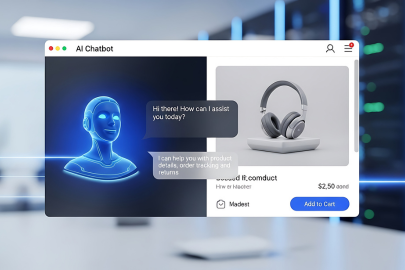
AI shopping agents are AI-powered digital assistants that help users complete shopping-related tasks based on their goals and preferences. Unlike traditional search engines or recommendation tools, they can understand what a user is looking for, evaluate available options, and support purchasing decisions through a single interaction.
Depending on their capabilities, AI shopping agents perform tasks such as:
- Compare product specifications
- Summarize customer reviews
- Identify suitable alternatives
- Monitor prices and availability
- Answer product-related questions
- Assist with purchases in some cases
Rather than responding to a single query, AI shopping agents are designed to complete a series of shopping-related tasks while keeping the user's requirements in mind.
AI shopping agents are becoming increasingly accessible through platforms and shopping experiences such as:
- ChatGPT Shopping
- Perplexity Shopping
- Google Shopping experiences powered by AI
- Amazon's AI-enabled shopping features
From Search to Suggestions: How the Shopping Journey Is Changing
For years, online shopping followed a structured process in which consumers gathered information from multiple sources before making a purchase. AI shopping agents are simplifying many of these research-intensive steps by bringing information together within a single interaction.
Traditional Shopping Journey
Step 1: Identify a need
Step 2: Search for relevant products
Step 3: Explore multiple websites or marketplaces
Step 4: Compare product features and specifications
Step 5: Read customer reviews and ratings
Step 6: Evaluate pricing, offers, and availability
Step 7: Complete the purchase
This journey requires consumers to switch between multiple platforms, compare information manually, and invest considerable time before deciding what to purchase.
AI-Assisted Shopping Journey
Step 1: Identify a need
Step 2: Ask an AI shopping agent
Step 3: Receive curated recommendations with product comparisons and summaries
Step 4: Verify key details, if needed
Step 5: Complete the purchase
Instead of gathering information across multiple sources, consumers may begin with a single AI interaction that organizes relevant information and narrows their options. While product details can still be verified before purchasing, much of the research process is completed within one conversation.
Read Also: What Does a Business Research Company Do? Role, Services, and Benefits
What Happens When AI Starts Influencing Decisions?
AI shopping agents are changing how consumers evaluate choices and reach purchase decisions. By organizing information and narrowing available options, they reduce the effort involved in product evaluation while keeping consumers involved in the final choice.
Some of the most notable shifts include:
- Less Decision Fatigue: Instead of evaluating dozens of similar products, consumers receive a curated shortlist that makes it easier to focus on relevant options. This reduces the cognitive effort involved in comparing a large number of choices.
- Greater Relevance: Consumers can receive recommendations based on factors such as their preferences, budget, priorities, and previous interactions, moving the experience beyond generic product suggestions.
- Evolving Trust: Purchase decisions depend on more than brand reputation alone in AI-assisted shopping environments. Consumers may also consider the reliability of AI recommendations, customer reviews, retailer information, and supporting product details before choosing a product.
- Selective Comparison: Rather than manually reviewing every available option, consumers can use AI-generated comparisons to narrow the field before independently evaluating the products that best match their requirements.
- Faster Decisions: AI accelerates information gathering and product evaluation, reducing friction in the decision process. Consumers still retain control over the final purchase, particularly for complex or higher-consideration purchases.
Are Brands Ready for AI-Assisted Shopping?
As AI becomes another intermediary between consumers and products, brands need to consider not only how they appeal to shoppers but also how effectively their products can be represented within AI-assisted experiences. This creates several considerations for businesses preparing for an increasingly AI-influenced shopping environment.
1. AI Discoverability: Product visibility is beginning to extend beyond search results, marketplaces, and brand websites. When AI shopping agents shortlist products, a brand's offering needs to be identifiable and relevant to the criteria being considered.
2. Data Readiness: AI systems depend on accessible product information to understand and differentiate available options. Brands therefore need clear and up-to-date information across areas such as:
- Product specifications and attributes
- Pricing and availability
- Certifications and relevant product claims
- Product descriptions and images
- Shipping and return information
Missing, outdated, or inconsistent information may affect how accurately AI-assisted shopping experiences represent a product.
3. Rising Expectations: As AI makes relevant recommendations and convenient access to information more familiar, shoppers may increasingly expect accurate information, relevant experiences, and fewer points of friction throughout the purchasing process.
4. Changing Loyalty: AI-generated recommendations can expose shoppers to brands they might not have considered independently. A familiar brand may compete with alternatives that more closely match a shopper's stated requirements.
5. Information Accuracy: Incorrect prices, outdated availability, or inaccurate product details create friction when shoppers verify an AI-generated recommendation. Maintaining consistent information across relevant channels becomes particularly important in this environment.
6. Human Control: AI-assisted shopping does not necessarily mean autonomous purchasing. Many consumers remain more comfortable using AI to research, compare, and narrow their choices while retaining control over the final purchase, particularly for higher-consideration products.
7. Less Predictable Journeys: Consumers can move between AI tools, search engines, marketplaces, retailer platforms, brand websites, and other information sources before purchasing. Brands can no longer assume that every customer follows the same linear path from discovery to purchase.
AI-assisted shopping therefore adds another layer to an already complex purchasing environment. As consumer journeys and purchase behaviors continue to evolve, businesses need reliable data on how people discover, evaluate, and choose products. This is where a market research agency can help by capturing consumer perspectives and behaviors through structured primary research.
The Growing Role of Market Research in the AI Shopping Era
As AI becomes more involved in consumer purchasing, businesses need current data on where, when, and why shoppers use it. Market research helps distinguish emerging behaviors from assumptions, measure how AI influences different stages of decision-making, and identify where established shopping habits remain important. Working with a market research agency allows businesses to examine these changes across consumer groups, product categories, and markets through structured primary research.
Here are some of the areas businesses can explore through market research:
1. Track Adoption: AI shopping behavior varies across consumer groups, shopping tasks, and product categories. Research can establish:
- Who is using AI shopping tools
- How frequently they use them
- Which shopping tasks they use AI for
- Which categories attract greater or lower AI usage
- Where consumers continue to prefer traditional search, marketplaces, brand websites, or physical stores
2. Measure AI Trust: Using an AI shopping tool does not necessarily mean consumers trust it with every task. Research can explore:
- Which AI-generated information consumers trust
- What information they verify independently
- Whether shoppers are comfortable receiving recommendations but not allowing AI to make the final purchase
- Whether trust differs by product category, purchase value, or consumer group
3. Identify Decision Drivers: AI adds another influence to an already complex purchase process. Research can examine how price, product features, reviews, brand familiarity, convenience, and AI recommendations contribute to the final choice and whether their relative importance changes when AI becomes part of the process.
4. Understand Expectations: Businesses can investigate what consumers actually want from AI-assisted shopping rather than assuming greater automation is always preferred. Research can examine expectations around:
- Recommendation relevance
- Information accuracy
- Transparency
- Convenience
- Personalization
- The level of control consumers want to retain
5. Examine Brand Consideration: AI-generated recommendations can place familiar and unfamiliar brands side by side. Research can explore whether consumers are willing to consider an unfamiliar brand recommended by AI, what encourages them to investigate it further, and which factors ultimately move that brand into or out of consideration.
6. Map New Journeys: AI does not necessarily replace other shopping channels. A consumer might start with an AI tool, verify specifications on a brand website, compare prices on a marketplace, and purchase through a retailer. Research can map these paths to establish:
- Where AI enters the journey
- Which channels consumers use for verification
- Where they continue product evaluation
- Where the final purchase takes place
7. Explore the “Why”: Knowing that a behavior occurs is different from understanding why it occurs. Quantitative surveys measure behaviors, attitudes, and preferences across a defined population, while qualitative methods such as in-depth interviews and focus groups explore the reasons behind those responses. Together, these market research services support the collection of reliable primary data on emerging shopping behaviors.
AI-assisted commerce is still evolving, and consumer responses will evolve with it. Regular research allows businesses to track these changes over time, distinguish sustained behavioral shifts from temporary patterns, and use current consumer data to inform decisions around customer experiences, product communication, channel priorities, and other areas affected by changing shopping behavior.
Navigate the AI Shopping Era with Unimrkt Research
As AI becomes a greater part of the shopping journey, businesses need reliable primary data to understand changing consumer behaviors, expectations, and purchase patterns. Unimrkt Research provides qualitative and quantitative market research services across consumer and B2B studies, helping organizations gather high-quality data from their target audiences.
Our capabilities span primary research, business research, and research support, backed by experienced moderators and interviewers, robust respondent recruitment, multilingual support, and global fieldwork expertise. We support a range of research methodologies, including in-depth interviews, focus groups, surveys, and CATI. As an ISO 20252 and ISO 27001-certified company, Unimrkt Research maintains rigorous standards for research quality and data security.
To discuss your research requirements, connect with Unimrkt Research at +91-124-424-5210, email sales@unimrkt.com, or fill out our contact form. Our team will be happy to discuss how we can support your next research initiative.
Frequently Asked Questions
Q1. Should I use qualitative or quantitative research to study AI shopping behavior?
It depends on the research objective. Quantitative research measures AI usage, behaviors, and attitudes across a larger sample, while qualitative research explores the motivations, experiences, and concerns behind those behaviors. A mixed-method approach is appropriate when a study requires both measurement and deeper exploration.
Q2. How can consumer trust in AI recommendations be measured through market research?
Researchers can assess consumer trust by measuring willingness to use AI recommendations, perceived reliability, verification behavior, and comfort with different levels of AI involvement. Interviews and focus groups can further explore why consumers trust, question, or reject particular recommendations.
Q3. Is there a difference between agentic AI and AI shopping agents?
Yes. Agentic AI refers to AI systems designed to plan and take actions toward defined goals with a degree of autonomy. AI shopping agents are a specific application of these capabilities in shopping, where they can help consumers search for products, compare options, evaluate relevant information, and, in some cases, assist with completing a purchase.
Q4. How can a market research agency help study AI-assisted shopping behavior?
A market research agency conducts primary research to collect data on AI adoption, shopping behaviors, purchase drivers, trust, brand consideration, and consumer expectations. Research objectives determine whether a study uses surveys, interviews, focus groups, or a mixed-method approach.
Q5. How can I choose between market research firms for an AI shopping study?
When comparing market research firms, consider their consumer research experience, qualitative and quantitative capabilities, respondent recruitment, geographic reach, data quality standards, and ability to reach the required target audience. Unimrkt Research brings these capabilities together through consumer and B2B research, global fieldwork, multilingual support, experienced moderators and interviewers, and robust respondent recruitment, along with ISO 20252 and ISO 27001 certifications.
Q6. What should an AI shopping consumer survey include?
An AI shopping consumer survey should be designed around the study objectives. Relevant areas include:
- Awareness and use of AI shopping tools
- Frequency and purpose of use
- Stages of the shopping journey where AI is used
- Trust in AI recommendations
- Information consumers verify independently
- Purchase drivers and barriers
- Brand consideration
- Comfort with different levels of AI involvement
- Expectations around accuracy, transparency, and control
Q7. Which research method is best for understanding why consumers use AI shopping agents?
Qualitative research is well suited to exploring why consumers use AI shopping agents. In-depth interviews explore individual motivations and experiences, while focus groups examine shared attitudes, differences in opinion, and responses that emerge through group discussion.
Q8. What consumer behaviors should be tracked as AI-assisted shopping grows?
Relevant behaviors include AI adoption, frequency of use, shopping tasks performed with AI, information verification, channel usage, product comparison, brand consideration, and the level of control consumers retain before purchasing. Tracking these areas over time shows how AI-assisted shopping behavior changes.
Q9. How can market research services support research into emerging consumer behaviors?
Market research services support primary data collection through surveys, interviews, focus groups, and other appropriate methodologies. Research measures emerging behaviors, examines the reasons behind them, compares consumer groups, and tracks changes over time.
Q10. When should AI shopping behavior be studied through interviews instead of surveys?
Interviews are appropriate when researchers need detailed information about individual experiences, motivations, concerns, or decision-making processes. Surveys are generally better suited to measuring behaviors and attitudes across larger samples. The two methods can also be combined when both depth and broader measurement are required.
Quick Enquiry
Customer Service, We Make it Better
Recent Posts
- How to Clarify and Align Your Research Goals for Maximum Impact
- Mining Valuable Data: The Driving Force for an Effective Growth Marketing Strategy
- Speaking the Customers Language: 7 Tips for Meaningful Qualitative Research
- Creating Value for Investors: The Benefits of Primary Market Research
- Utilizing Closed-Ended Questions For Quantitative Market Research
- Capturing the Changing Interests of Millennials Through Qualitative Research
- Refining Unit Economics with Robust Quantitative Market Research
- A Concise Guide to Quantitative Market Research
- 3 B2B Market Research Trends That Could Shape 2024
- Eyes on 2024: Changes That Might Disrupt the Healthcare Industry This Year
- Cracking the Language to Make Survey Questions Inclusive in 2024
- Attracting Investors: How Market Research Can Solidify Your Case
- Solid Foundations: Ways to Enhance Trustworthiness in Qualitative Research
- What Makes CATI Research So Effective?
- Moderator Qualities That Improve Qualitative Market Research
- 5 Consumer Market Trends That Will Define 2024
- What are the strengths of quantitative research?
- How to Make Your Partnership with Primary Market Research Firms Fruitful
- A Quick Guide to Harnessing the Strengths of Quantitative Research
- Advice from Your Research Partner: Don't Compromise Quality on Online Surveys